
Light travels at about 299792458 meters per second. Why not more? or less? Why can’t it have more than one speed?
To tell the truth, light does have more than one speed: the one we know, the one that nothing can surpass, is the speed of light in a vacuum. But if it goes through a material, light travels slower. More than that, light of different colors (different wavelengths of the electromagnetic radiation, if you want to be picky) travel at different speeds through the same material. That’s the phenomenon behind rainbows (and Pink Floyd album covers).
But the question remains: why does light have that one special speed (in the vacuum)? Eh. Good one. There is an answer, but you might not like it: light has that speed just because. No real reason.
The value of this universal constant (and many others) is a fact for which there is no explanation. Universal constants are our windows in the deep fabric of the universe itself. They are simple numbers that rest on nothing, on which everything else rests.
That doesn’t mean that the laws of physics that are based on them are empty. Laws are tools to predict what happens in particular conditions. Change the value of the constants (that is, change universe) and the laws still stay the same.
If the speed of light were different, it would still be the fastest thing in the universe. Except for bad news.
If you want more
- The speed of light, in fact, is not about light at all
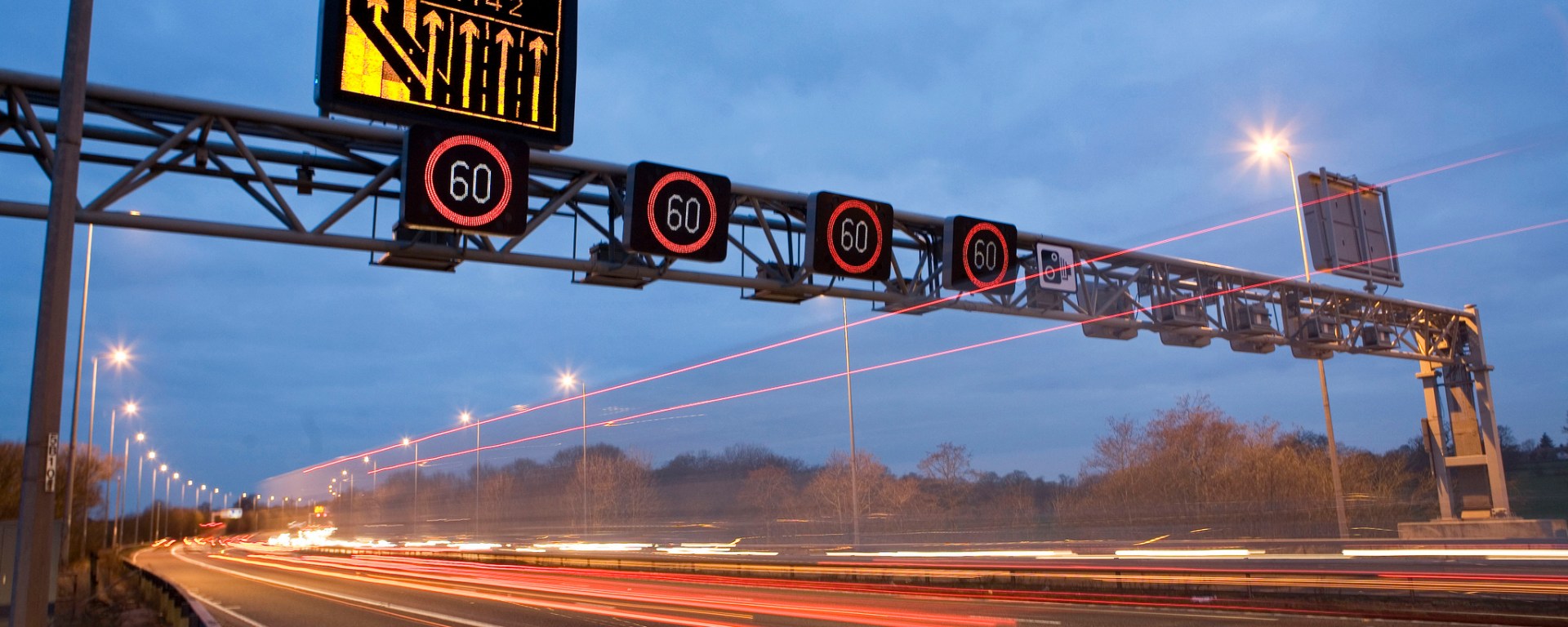
Foto: CC-BY HA1-000995 di highwaysengland su Flickr, some rights reserved.
I took the question, and some ideas for the answer, from a question on Quora
 PhysicalLove

One thought on “Speed limits”