





Who will win the NBA finals?
What if I told you that you can simulate an NBA game (say, tonight’s Finals Game 4) just by flipping a coin? If it’s heads, chalk two points for the Cavs, if it’s tails, two points for the Warriors. Repeat a hundred times or so and presto! Game simulated. You can even see the narrative of the game unfolding: the balanced start, the Dubs offense … Continue reading Who will win the NBA finals?

Why are soap bubbles colored?
Soap bubbles are mostly water and, how we can see every day, water reflects part of the light that hits it. So, when light arrive on a bubble, some of it bounces right off the surface, like it does off the surface of a lake. The rest enters the thin layer of soapy water that forms the bubble. Light travels peacefully through all of it, … Continue reading Why are soap bubbles colored?
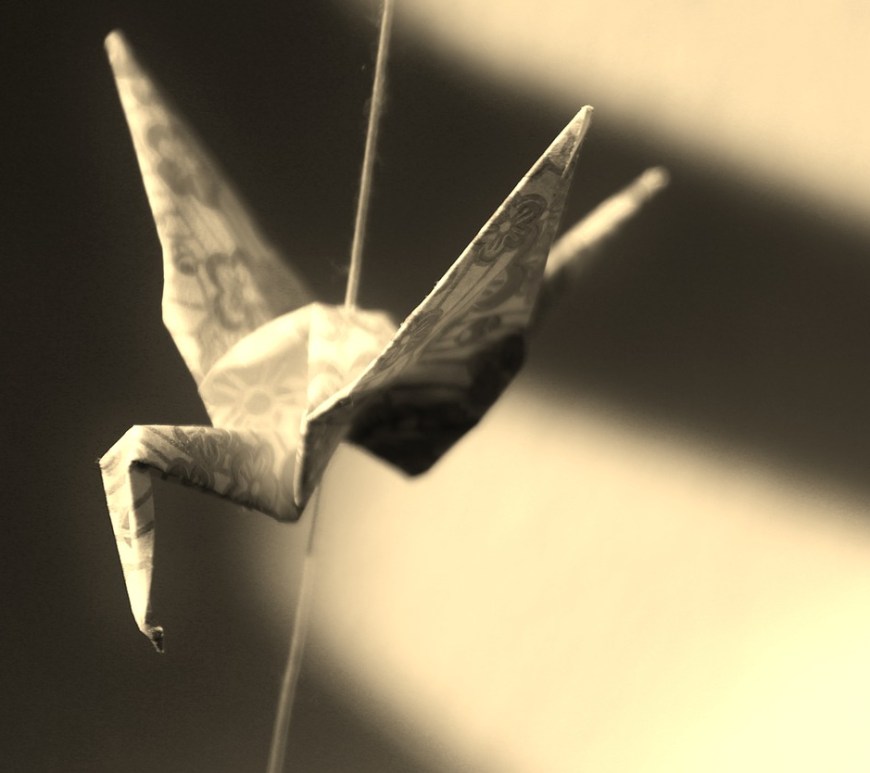
How many times can you fold a piece of paper?
Some time ago I came across a fun article. I got curious, and embarked on a journey that took me to the source of a famous internet myth and even to explore what it means to be a physicist. But let’s not get ahead of ourselves. The article was about the myth that it’s impossible to fold a piece of paper more than 7 times, … Continue reading How many times can you fold a piece of paper?

Four fundamental things about gravitational waves
The team at LIGO (the Laser Interferometry Gravitational-wave Observatory) annouced they directly measured the gravitational waves emitted by two black holes merging into one. What are they talking about? Here’s the answer to 4 of the most common questions (plus 2 extra-credit, if you feel up to it). What are gravitational waves? Gravitational waves are ripples in space-time predicted by Einstein’s General Relativity theory. If … Continue reading Four fundamental things about gravitational waves
Why teach a computer to play Go
Two opponets face off in an ancient strategy game. However, only one of them is a person, and he’s not winning. The historic victory of AlphaGo has made quite the round in the news. Why is it so important? Now for the short review: Go is a Chinese board game. One of its distinguishing features (at least for computer scientists) is the mind-boggling number of … Continue reading Why teach a computer to play Go
How to discover an element
Want to name an element on the periodic table? Piece of cake! Just follow this simple, step-by-step guide. The first thing you have to do is to discover an element. At the moment, the periodic table has no blank spots to be filled: all elements with 118 or fewer protons have been found already. Though luck. Moreover, since very crowded nuclei don’t stick together for … Continue reading How to discover an element

A very foggy title
I grew up in a famously foggy place. Usually, it’s just a nuisance, but if you know how it works, at least you can add a little poetry to it. The first thing you need to know is that warm air keeps moisture better than colder one. Which is to say, water remains a vapor more easily in warm air. When a mass of warm … Continue reading A very foggy title

Every snowflake is unique
No Christmas landscape is complete without snow. Lots of snow. And every little snowflake is unique, everyone knows that! How come, tho? Snow is nothing else than teeny tiny ice crystals that form in the clouds and stay solid all the way down to the ground. Water crystallizes around microscopic imperfections, like dust particles floating in the clouds. Once the initial nucleus is formed, the … Continue reading Every snowflake is unique
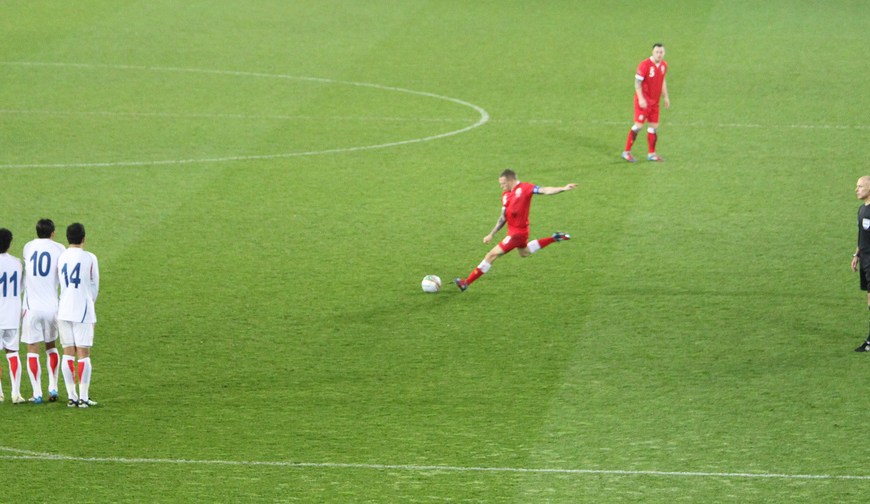
The screwball post
90th minute. Beckham sets the ball down. If he scores, England goes to the world cup. He takes a look at the wall and shoots. The ball bends in mid-air, tricks the keeper and goes in the top corner. Ok, you don’t need to be Beckham to bend it like he does. But how did he do it? As you probably heard, physicists like leave … Continue reading The screwball post

No country for plasma TVs
There’s a beautiful country, with forests and deserts, vast salt lakes and tall mountains. A country where driving can be mortally dangerous. A country where your new plasma TV won’t last very long. ¡Bienvenidos a Bolivia! A plasma screen is basically a bunch of small neon lamps. They work by passing an electric current through a container full of gas (like, you guessed it, neon!): … Continue reading No country for plasma TVs
 PhysicalLove