

The relativity experiment you hold every day
We’re proving Einstein right all the time. With our phones. Continue reading The relativity experiment you hold every day
From spaghetti to AI and futuristic materials, the fantastic science behind things that appear mundane now–or one day will
We’re proving Einstein right all the time. With our phones. Continue reading The relativity experiment you hold every day

Think about the most quiet place you’ve ever been to. Now imagine something even quieter. What does that sound like? If you can’t figure it out, physics can help: let’s start by looking at how sound works. Loudspeakers, vocal folds and instruments all function by the same principle: rhythmically push and pull on air. The air molecules, in turn, push and pull on their neighbors, … Continue reading The sound of silence

‘Tis election season! What can physics tell us about elections and how we collectively make decisions? Continue reading The attractive physics of voting

Planning a series of actions is easy for us, but not for computers. A new neural network is bridging the gap—and could make you pie. Continue reading The computer that can navigate the subway
So it wasn’t gravitational waves after all: the Nobel prize for physics went to David Thouless, Duncan Haldane and Michael Kosterlitz. That’s the easy part. The motivation needs a little unpacking: For theoretical discoveries of topological phase transitions and topological phases of matter. We all know and love a few phases of matter: solid, liquid and gas (maybe plasma if you want to get kinky). … Continue reading Theoretical donuts and quantum computers: the Nobel prize 2016
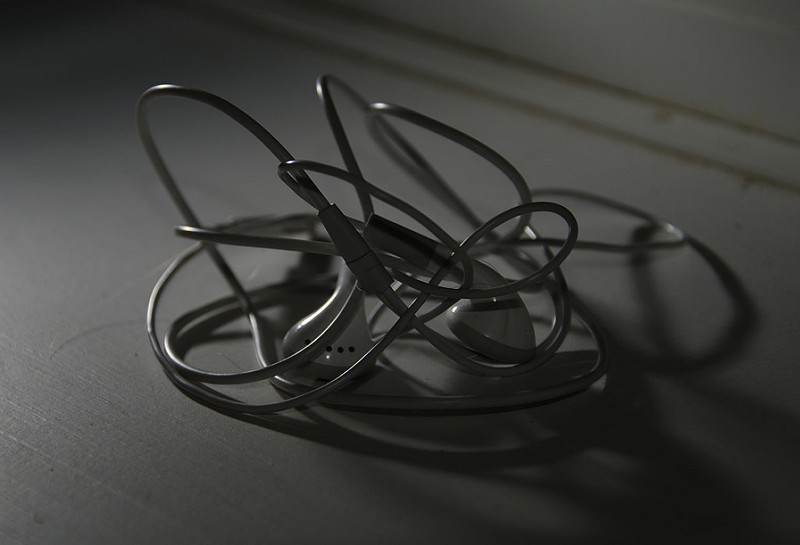
We’ve all been through it: we want to listen to some music, take our earbuds out of our bag only to find—THE HORROR!—an impossibly tangled mess. Can’t anyone assuage this terrible scourge? According to physics… nope, not really. As it turns out, earbuds tangle up because of a simple but deep reason. Namely, there are precious few ways for a chord to register as “tidy”, … Continue reading Earbuds must tangle!
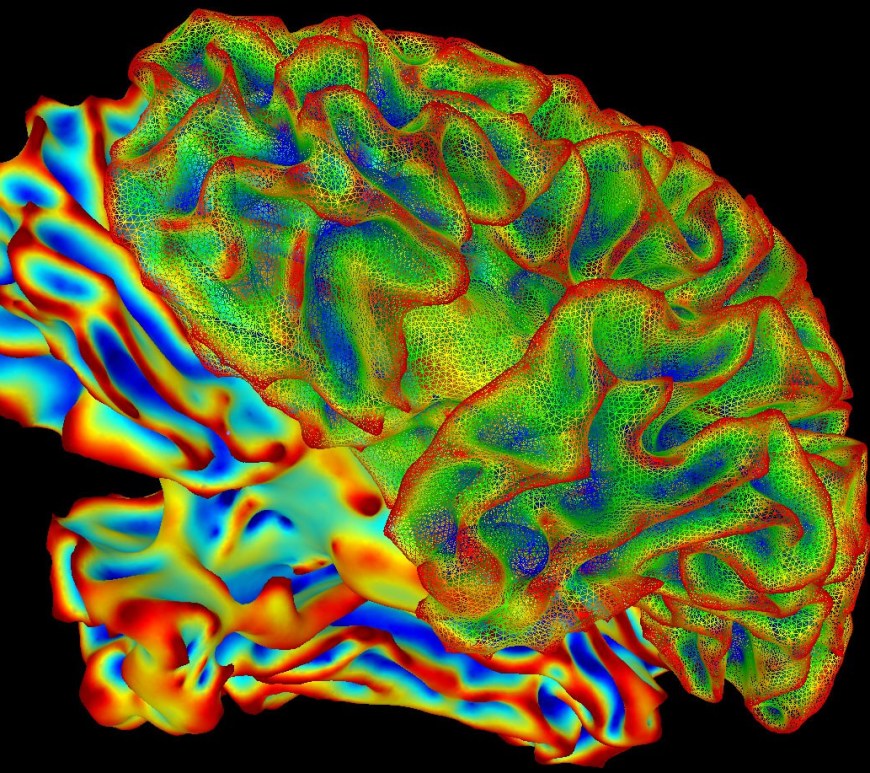
Some parts of the brain “light up” when we feel certain feelings, or listen to music, or tackle math problems. Certainly you’ve stumbled upon such news, given how frequently they end up in mainstream media. The technique used for these studies (and many others in neurosciences) is called functional Magnetic Resonance Imaging (or fMRI), which is an amazing thing, but also seems to have a … Continue reading What the eff is an fMRI?
Nonostante sia molto improbabile che ne avremo in casa, i computer quantistici cambieranno molte cose quando arriveranno. E arriveranno. Vale la pena sapere di cosa si parla. Continue reading Come funziona un computer quantistico

What if I told you that you can simulate an NBA game (say, tonight’s Finals Game 4) just by flipping a coin? If it’s heads, chalk two points for the Cavs, if it’s tails, two points for the Warriors. Repeat a hundred times or so and presto! Game simulated. You can even see the narrative of the game unfolding: the balanced start, the Dubs offense … Continue reading Who will win the NBA finals?
Soap bubbles are mostly water and, how we can see every day, water reflects part of the light that hits it. So, when light arrive on a bubble, some of it bounces right off the surface, like it does off the surface of a lake. The rest enters the thin layer of soapy water that forms the bubble. Light travels peacefully through all of it, … Continue reading Why are soap bubbles colored?

 PhysicalLove