
What the heck is energy?
Electricity, fuels, heating: energy is all around us. Physicists talk about it all the time to decode the mechanisms behind basically every process. Yet a good definition of energy is hard to come by: what is this “energy”?

From spaghetti to AI and futuristic materials, the fantastic science behind things that appear mundane now–or one day will
Electricity, fuels, heating: energy is all around us. Physicists talk about it all the time to decode the mechanisms behind basically every process. Yet a good definition of energy is hard to come by: what is this “energy”?

Something like Harry Potter’s invisibility cloak might actually be the best way to become invisible in real life. Unfortunately, it surely won’t be here for your next Christmas gifts, although scientists are trying (with some success) to understand how to make one.


Seeing through opaque objects is notoriously hard. Unless you have Superman’s “X-Ray vision”, or those “X-Ray specs” that for decades have promised teen voyeurs the ability to see through clothes. What would be the physics of that? And is it at all possible to have X-Ray vision?


Thousands of previously unknown Maya structures reveal interconnected cities, defensive walls, landscape architecture, plus space and organization indicating millions of people living there. And they were found thanks to physics.

You know the drill: hand luggage in the X-ray thingy, put coins-phone-keys-bracelets-watch-necklace in the tray and ready for the metal detector. How the eff does it know I forgot to take off my stupid belt?!


If you try to sit on a pond or drink a chair, you’ll quickly realize there’s a significant difference between solids and liquids. The rule of thumb I learned in school is that a liquid takes the form of its container. Then again, that would make this cat a liquid.
So the line between liquids and solids is a little more blurred than we’re told. Continue reading “Are cats solid or liquid?”
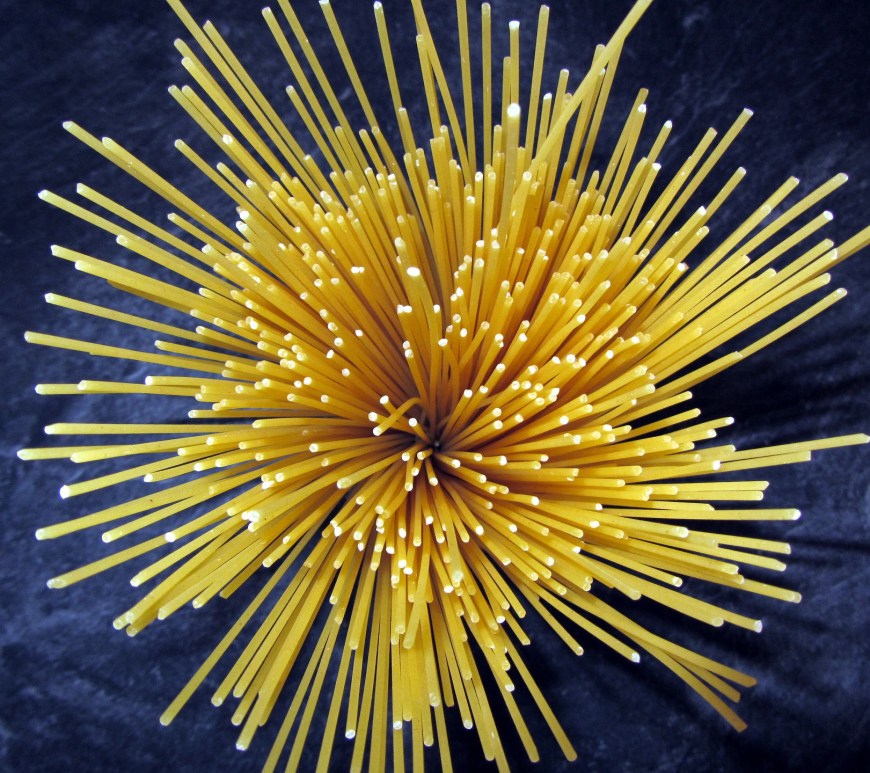
If you grab a piece of spaghetti and bend it further and further, it will eventually break. It won’t just break in two, though: most likely it will break in three or more pieces. What sorcery is this?
Don’t believe me? Be a scientist: try it yourself!

Want to win a Nobel prize while discovering a material that’s cheap, transparent, flexible but resistent, and an astonishing electric conductor? Grab a pencil and a roll of adhesive tape. I’m serious.

The secret of perpetually stainless stuff hid for centuries in plain sight—at least for those of us living around lotus leaves. Now physics can help you never to clean again, no matter what you spill.

It all comes down to how water sticks to stuff, in other words, how stuff gets wet. Continue reading “How to make something clean itself”

Capillarity is a staple of school physics. But are you sure you know how it works? And what do dragons have to do with it? Continue reading The thirsty dragon and other capillarity magic

 PhysicalLove