
Where you grow up has a lot of influence on you, even if you are a bacterium. But when it changes, it makes life—and evolution—a lot more random.
Bacteria experience a lot of change: even the ones sheltered in our bodies (part of the famous microbiome) get the amounts and type of foods we decide to scarf down. Plus they get showered in waste, hormones, and all sorts of chemicals whenever our body feels like it.
We used math and computer simulations to see what would happen to a population living in an unpredictable environment, where food flips randomly between much and little.
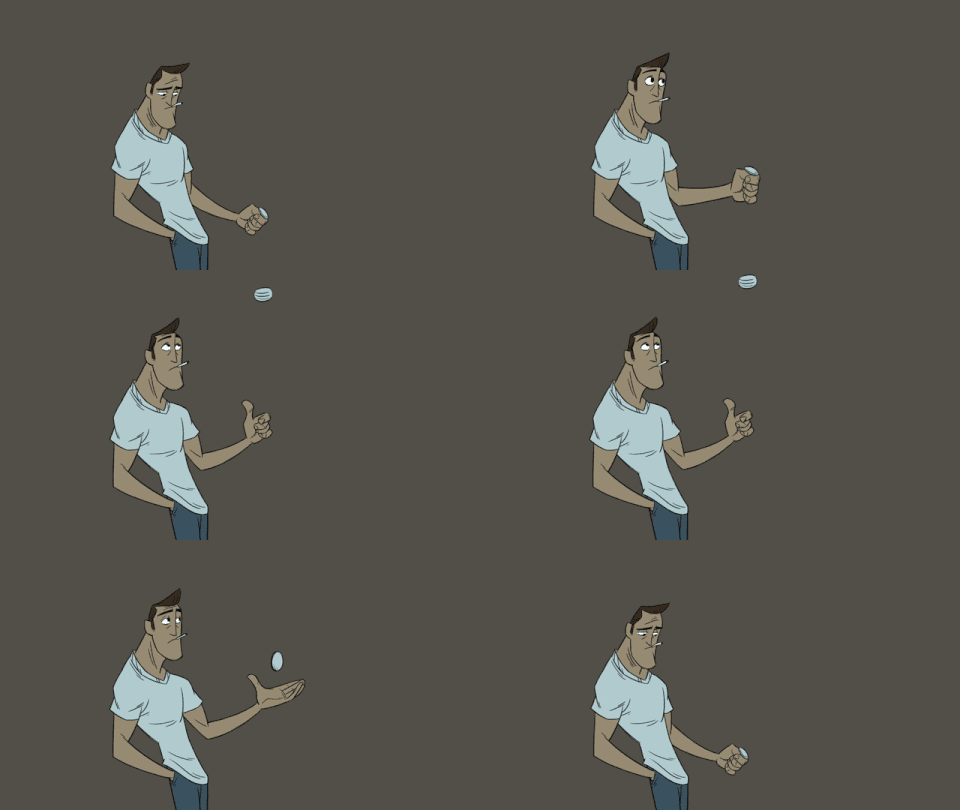
Scarce food means small populations, so random stuff happening to each bacterium has a big impact on the whole community. So randomness becomes almost as important as selection in determining which species survive and which ones go extinct. When food is plentiful, it’s the opposite: the population grows, randomness matter less, and selection holds the steering wheel of evolution.

Turns out that this capricious environment levels the playing field: bacteria that selection would normally weed out have a much better chance of surviving in this context.
Cooperating bacteria, who spend resources to help their community, are at a disadvantage against freeloading competitors who just exploit them without contributing. Our research tells us that an unpredictable environment can be a factor helping cooperators stick around.
An interesting application (though not quite around the corner) is studying the vast community of bacteria living in and on us. The more we study them, the more they seem to impact our lives. It would be interesting to understand not just how they influence us, but also, as these results show, how we influence them.
If you want more
- This research was actually published on an actual scientific journal (you can also find a version of the text here). It’s been also covered by the press office of Munich university and of the University of Leeds.
- This is but the second installment of a series about what physicists (in this case, I) do. Read it all here!
Cover photo: CC0 Karl Wienand, derived from photos (1,2,3,4) Heiko Stein/pixabay.com
 PhysicalLove